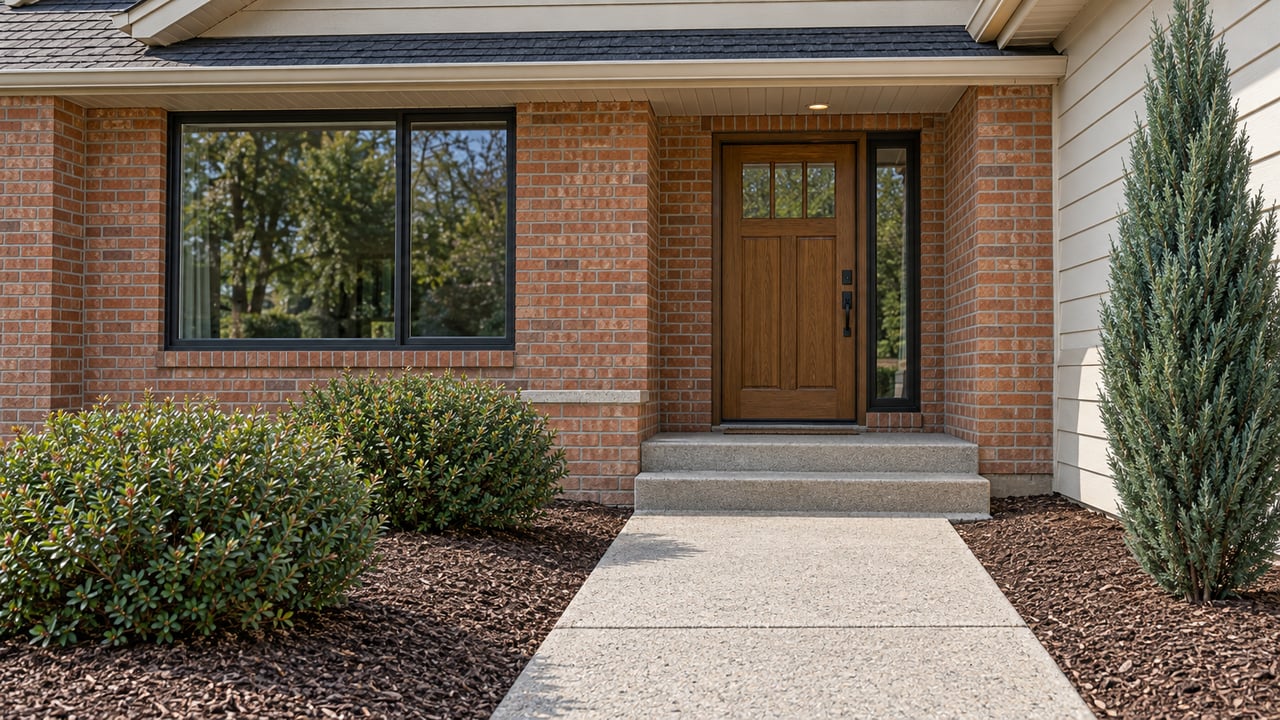
In Aurora, Two Homes at the Same Price Can Carry Very Different Tax Bills
A property tax bill in one Aurora zip code can run around $2,426 a year. In another zip code, on a home worth roughly the same amount, that bill can run closer to $6,284. Same city, similar price point, a gap of nearly $3,900 a year. That is not a data error. It is what happens when a single city sits on top of three counties and dozens of special taxing districts that most buyers never think to ask about until the first tax bill lands.
If you are comparing Aurora against Centennial, Parker, or Highlands Ranch on price per square foot alone, you are looking at half the picture. The other half is which of Aurora's counties, school districts, and metro districts your specific address falls into, and that half can move your annual cost of ownership by thousands of dollars without changing the sale price by a dollar.
Aurora is the only city in the Denver metro that stretches across three counties: Arapahoe, Adams, and Douglas. Most of the city, and most of its population, sits in Arapahoe County. The 2020 census put 336,035 Aurora residents in Arapahoe County, compared to 47,720 in Adams County and just 2,506 in Douglas County. The Adams County piece runs along the city's northwest edge and up toward Denver International Airport. The Douglas County sliver sits at the southeastern tip, where Aurora presses up against the county line.
Each county sets its own base levies, and each stacks its own sales tax on top of the state rate. Adams County adds roughly three-quarters of a percentage point at the register, Arapahoe adds a quarter point, and the Douglas County portion of the city carries a full percentage point on top of the state and city rates. None of that is dramatic on its own. What it does is set a different floor under every other tax layered on top of it, and in Aurora's newest neighborhoods, a lot gets layered on top.
Nearly every large master-planned community built in Aurora over the past decade financed its own roads, parks, and recreation centers through a metropolitan district, a local government created specifically to issue bonds for that infrastructure and then collect a mill levy from homeowners to pay it back. Painted Prairie, The Aurora Highlands, Southshore, Tallyn's Reach, and Inspiration all operate this way. So do smaller districts named in the city's own regional improvement agreements, among them Beacon Point, Blackstone, and Wheatlands.
Painted Prairie publishes its own numbers, and they show what stacking looks like in practice. The community's 2025 total residential mill levy, the one Painted Prairie homeowners are paying against this year, runs between 168.5 and 199.6 mills depending on which of the community's metro districts a given lot sits inside. That total is built from Adams County's base levy of 27.479 mills, Aurora's own levy of 7.087 mills, individual Painted Prairie metro district levies ranging from about 58.5 to 68.8 mills, the Aurora Public Schools district levy of 73.186 mills, and smaller regional improvement and drainage district levies on top. Painted Prairie's own sample calculation puts the tax on a $500,000 home at roughly $7,036 a year, close to 1.4 percent of the sale price.
Compare that to Aurora's citywide median effective property tax rate, which sits at about 0.67 percent, according to property tax data platform Ownwell. That is the rate an established, non-metro-district Aurora neighborhood is likely to land near. Run that same $500,000 sale price through the citywide median rate and the bill comes out closer to $3,350, less than half of what the metro district math produces. The house did not get more expensive. The taxing structure underneath it did.
None of this means a metro district is a red flag. Aurora has required every new metro district to follow a Model Service Plan since 2004, which caps the debt-repayment mill levy at 50 mills, limits how long that levy can be imposed to 40 years, and puts a ceiling on how much private debt a district can carry. The protections exist because the city has approved this financing method for so long that it needed guardrails. What the protections do not do is make the levy disappear. They just make sure it eventually ends and stays within a defined range.
Most of Aurora is served by Aurora Public Schools or, in parts of the southeast, Cherry Creek Schools. But the county lines and the school district lines do not always match the city limits, and two specific neighborhoods show why that matters. Inspiration, one of the newer communities near the Douglas County edge, is located within the Douglas County School District rather than Aurora Public Schools, because the neighborhood itself sits in Douglas County even though it carries an Aurora address. On the opposite side of the city, Highpoint at DIA sits far enough northeast that it falls into School District 27J, based in Brighton, rather than either of Aurora's more commonly assumed districts.
Neither of these is a defect. They are simply proof that in Aurora, the school district serving a specific address has to be confirmed at the parcel level, not assumed from the city name on the listing.
The practical version of all this is straightforward. Before you get attached to a specific Aurora listing, find out three things: which county the parcel sits in, whether a metro district or community authority levies against it, and which school district actually serves that address. The county determines your base rate and your sales tax exposure. The metro district, if there is one, determines how much gets added on top and for how long. The school district determines a levy of its own and, for many buyers, a separate set of enrollment questions entirely.
Each of the three counties runs its own assessor's office, so a parcel's exact mill levy has to be pulled from the right one. Arapahoe County posts its mill levy and tax district information directly through the county assessor's office. Newer communities like Painted Prairie post their current levy breakdown for homeowners and prospective buyers on their own community sites. Either way, the number you want is the certified levy for that specific parcel, not a citywide average, because in Aurora the average tells you almost nothing about what a given address will actually owe.
The payment calendar, at least, is consistent no matter which county you land in. Colorado property taxes are billed the year after the tax year, and the standard schedule offers a full payment by April 30 or two installments, with the first due by the end of February and the second by June 15.
Does a metro district mean a neighborhood is a bad investment? No. Metro districts are how most large new communities in the Denver metro finance their own infrastructure. Aurora's Model Service Plan puts a cap on the debt-repayment mill levy and a limit on how long it can run, so the added cost is bounded and temporary rather than open-ended.
How do I find the exact mill levy for a specific Aurora address? Confirm which county the parcel sits in first, since Adams, Arapahoe, and Douglas each maintain separate assessor records. From there, the county assessor's office or treasurer can provide the certified mill levy for that specific parcel, and many metro-district communities publish their current levy breakdown directly for residents and buyers.
Are established Aurora neighborhoods always cheaper to own than new construction? Not always, but the effective tax rate tends to run lower in established, non-metro-district neighborhoods, generally in the 0.6 to 0.7 percent range citywide, compared to communities carrying an active metro district, where the combined rate can run well above 1 percent. The gap narrows over time as metro district debt gets paid down, but it does not disappear on day one.
If you are weighing an Aurora listing against something in Centennial or Parker and the sticker prices look close, the taxing structure underneath each one is worth a real conversation before you write an offer, not after your first bill arrives. Nicole Pinette and the team at Pinette Realty Group can pull the certified levy for a specific parcel, walk through what county and school district actually apply, and make sure the number on the listing and the number on your first tax bill are not a surprise to each other.
Stay up to date on the latest real estate trends.
We pride ourselves in providing personalized solutions that bring our clients closer to their dream properties and enhance their long-term wealth.
Get In Touch With Our Team To Learn More

8955 RIDGELINE BLVD STE 1400 HIGHLANDS RANCH CO 80129