A September Snapshot of Greenwood Village
Century Communities put out a press release in June announcing that groundbreaking had begun on 90 detached homes south of The Landmark, luxury floor plans running from 3,280 to 4,500 square feet, pricing from $1.7 million to $3 million, sales starting spring 2027. It is the kind of story that gets picked up by finance wires and regional business journals because it has everything a press release needs: a number, a date, a rendering.
That is one version of what Greenwood Village looked like this month. It is not the version most residents actually lived. The other version happened at a fine arts festival in a park, on a concert calendar closing out with two shows that share nothing but a zip code, and in a strip retail center that added two restaurants without anyone issuing a statement about it. Both versions are true. Only one of them explains what it's actually like to live here in late September.
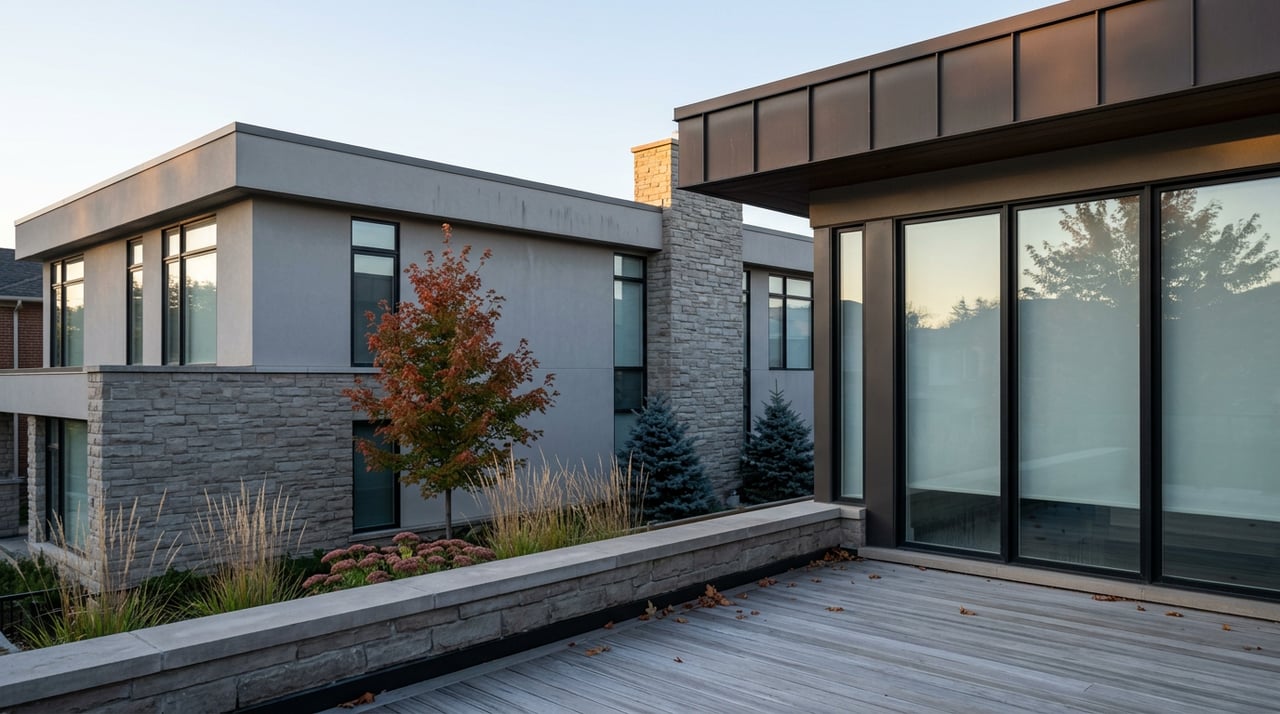
The Village at Landmark is real, and it matters. Century Communities, a Greenwood Village based homebuilder, is putting 90 single-family homes on a 13 acre site directly south of The Landmark's shops, restaurants and Comedy Works, with a gated layout that includes private elevators, rooftop living spaces and three-bay garages. It is a rare thing in this city: a large infill parcel, tightly held for years, now becoming almost a hundred new addresses within walking distance of a movie theater and a comedy club.
That kind of project photographs well and reads well in a wire story, which is exactly why it traveled from PRNewswire to Yahoo Finance to Colorado Biz without much friction. It is a clean narrative about growth, and growth stories are easy to tell. What they tend to skip is the texture of an ordinary week for the people who already live three streets over, the ones who were not waiting on a groundbreaking to know their neighborhood was busy.
On September 19th and 20th, Curtis Park hosted Art on the Green, a fine arts festival with dozens of vendor booths, food trucks and live music that runs every fall without needing a developer's marketing budget behind it. No company issued a statement when it wrapped. It just wrapped, the way a neighborhood festival does, and the only people who noticed were the ones who showed up.
A few steps away, the Curtis Center for the Arts has its "Here + Now" exhibit running through October 23rd, quietly overlapping with the festival crowd without any coordinated marketing push between the two. Nobody announced that overlap either. It just happens, the way it happens most years, because the park and the arts center sit close enough together that one event bleeds into awareness of the other.
Fiddler's Green Amphitheatre spent its 2026 season hosting Dave Matthews Band, Muse, Jack Johnson and Sublime, the kind of lineup that reads like a decade of adult alternative radio. Then the latest shows on the books close things out with two dates that could not sound less alike if they tried:
Nobody planned this juxtaposition as a marketing strategy. It is simply how the booking calendar landed, and it says something honest about who actually drives up Greenwood Plaza Boulevard to see a show here. The venue is not one audience. It is whichever fanbase bought tickets that particular week, and for one September, that means underground rap on a Friday and a full orchestra playing video game scores on a Sunday, two days and one very different crowd apart.
The Landmark's roster of restaurants, its wellness studios like Cyclebar and Pure Barre, its entertainment lineup of Comedy Works, JING and Upstairs Circus, all of it is well documented on the district's own site because The Landmark is a managed property with a marketing team. That part of the dining scene gets curated attention.
At The Orchard shopping center, a few minutes away, The Wilson, a farm-to-table concept, and Gyu-Kaku, an interactive Japanese BBQ spot with tabletop grilling, are both opening this year, filling out a retail center that was never built to be a destination the way The Landmark was. Meanwhile, over on DTC Boulevard, Chicken Salad Chick opened its eighth Colorado location back in February, a fast-casual chain slotting into a corridor better known for its office towers than its lunch options.
None of these openings needed a groundbreaking ceremony or a rendering. They needed a lease and a kitchen buildout. That is the difference between the two versions of this neighborhood's growth story: one gets announced, the other just shows up on a menu.
Put these pieces next to each other and a pattern emerges that no single press release captures. Greenwood Village is not consolidating into one polished district the way a glossy renderings package might suggest. The luxury infill is real and it is happening at The Landmark's doorstep. But the restaurants are spreading into The Orchard and along DTC Boulevard, the concert calendar is swinging between genres that share almost no overlap in audience, and the arts festival that just wrapped at Curtis Park runs on its own schedule entirely, indifferent to whatever else is under construction nearby.
That scatter is not a flaw in the story. It is the story. A city this size does not need every new business, every closing concert, or every festival weekend to fit under one marketing umbrella to feel coherent to the people who live here. It feels coherent because the same resident can walk a farm-to-table opening at The Orchard on Tuesday, catch an orchestral video game concert at Fiddler's Green on Sunday, and still make it to Curtis Park before the "Here + Now" exhibit closes in October. The press release captures the biggest single transaction. It does not capture the week.
If you already live in Greenwood Village, none of this is news to you in the way a headline is news. It is just Tuesday. But if you are the kind of person who pays attention to how a place actually behaves rather than how its biggest development gets described in a wire story, this is the more useful read on where the city is headed.
Whenever that kind of granular, on the ground read on a neighborhood becomes relevant to your own address, whether you are watching the market from the sidelines or getting ready to make a move of your own, Pinette Realty Group has spent close to three decades paying attention to the small, unannounced things that actually shape a South Metro Denver neighborhood. Start Your Home Journey whenever you're ready to talk it through.
Stay up to date on the latest real estate trends.
We pride ourselves in providing personalized solutions that bring our clients closer to their dream properties and enhance their long-term wealth.
Get In Touch With Our Team To Learn More
8955 RIDGELINE BLVD STE 1400 HIGHLANDS RANCH CO 80129